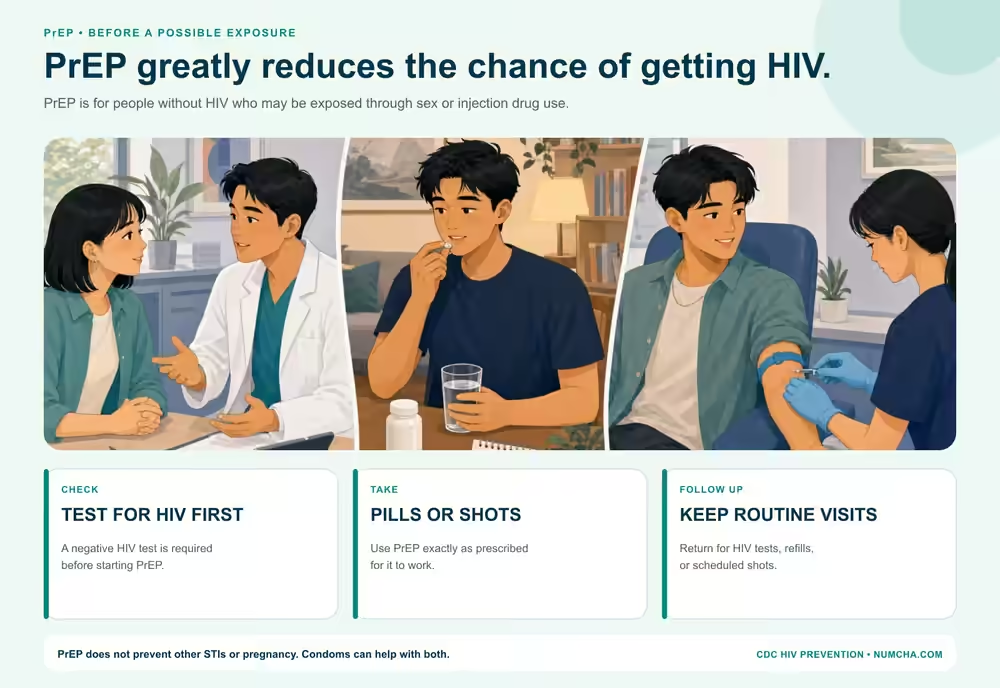
PrEP—pre-exposure prophylaxis—is medicine used by people without HIV to prevent HIV before a possible exposure. It can be a pill, an injection, or another option depending on local guidance and availability. The best PrEP plan is one you can use consistently and review with a qualified provider.
QUICK COMPARISON
Compare common PrEP options
PrEP availability differs by country. A provider should explain which options are approved locally, what tests are needed, and how missed doses or appointments are handled.
| PrEP option | How it is used | Useful questions |
|---|---|---|
| Daily oral PrEP | A pill taken every day according to the prescription. | Can I take it reliably, what tests do I need, and what should I do if I miss a dose? |
| Long-acting injectable PrEP | An injection given on a set schedule; the interval depends on the medicine. | Is it available here, how often are visits, and what happens if an appointment is late? |
| Other WHO-recommended options | Options such as the dapivirine vaginal ring may be offered in some settings. | Is this approved and available locally, and is it suitable for the type of exposure I want protection from? |
01
Start with what you want PrEP to do for you
PrEP is for people who do not have HIV and want protection before a possible exposure through sex or injection drug use. You do not need to fit a label, disclose every detail, or prove that you are ‘high risk’ to ask about it. CDC clinical guidance says PrEP should be prescribed to anyone who asks for it, after confirming that it is clinically appropriate.
02
Know the methods—and avoid choosing from a headline alone
WHO currently recommends several PrEP choices: tenofovir-based oral PrEP, the dapivirine vaginal ring, long-acting injectable cabotegravir, and twice-yearly injectable lenacapavir. Approval and supply are different in each country, and not every method protects every population or exposure in the same way.
03
Complete the right checks before you start
A negative HIV test is essential before starting or restarting PrEP. Taking PrEP when an unrecognized HIV infection is already present can make treatment choices more complicated, so tell the provider about any recent exposure, flu-like symptoms, recent PEP, or PrEP use. No HIV test detects infection immediately after exposure.
- Which HIV test will I have before starting, and could I still be in the window period?
- Which PrEP methods are approved and available where I live?
- Which laboratory tests and vaccines should be reviewed for this method?
04
Treat follow-up as part of PrEP—not an optional extra
PrEP does not provide full protection immediately, and the time to protection varies by method and type of exposure. Ask exactly when your provider expects protection to begin and whether another prevention method is needed during the starting period. Take pills and attend injection visits on the agreed schedule.
05
Place PrEP inside a broader prevention plan
PrEP prevents HIV; it does not prevent other STIs or pregnancy. Condoms, lubricant, STI screening, contraception, sterile injection equipment, and honest conversations can be added according to your needs. Using more than one tool is not a sign that PrEP failed—it is person-centred prevention.
KEEP READING ON NUMCHA
Guides for your next step
FAQ
Frequently asked questions
Is PrEP only for gay and bisexual men?
No. PrEP can be considered by people without HIV who may be exposed through sex or injection drug use. The suitable method depends on the person, type of exposure, local approval, and clinical guidance.
Can I start PrEP after a possible exposure?
If the exposure was within 72 hours, seek urgent PEP assessment. A provider can then discuss moving from PEP to PrEP if ongoing prevention would help.
Does PrEP protect me immediately?
Not always. Time to protection varies by medicine, schedule, and type of exposure. Ask the prescribing service when protection is expected and what to use while starting.
GO DEEPER
Ready for the complete guide?
Open the related guide for detailed explanations, questions to ask, and your next step.
AUTHOR
Numcha Editorial Team
Public-health content teamThe Numcha Editorial Team turns primary public-health guidance into clear, respectful information for people across Southeast Asia.
CONTENT REVIEW
Numcha Editorial Review
Source and safety reviewThe review checks health claims against named public-health sources and avoids replacing individual clinical advice with general information.
Source and safety review completed 24 August 2026. Medicine choice and monitoring must follow local clinical guidance.
SOURCE AND REVIEW
Built from primary public-health guidance.
This article provides general information and does not replace an individual medical assessment, especially for urgent situations or medicine decisions.